

This is not intended as medical advice. If you have questions about newborn care, contact your child’s pediatrician.
Nobody anticipates that their baby will have to be rushed off to the NICU right after birth. We didn’t, anyway.
After the OBGYN found that Holly was 4 cm dilated and the fetus’ heart rate dropped during monitoring, a C-Section was scheduled for later that day, at 31 weeks of pregnancy. We’d had a whirlwind few days of ups and downs as it looked like continuing the pregnancy longer might be safe and then discovering increased risk while monitoring. We ended up getting to meet our little one when she was 9 weeks premature.
While anxiously awaiting the scheduled C-section, we met with a whole slew of folks from the team—the head surgeon, anesthesiologist, medical assistants, social workers, the very cute Chief Cuddling Officer (!!!) yellow lab, and others. And then we met with the neonatologist.
The neonatologist gently talked us through the typical outcome for a preterm infant born at 31 weeks. Lung development would potentially be incomplete, so our baby would probably need respiratory support for a period of time. She would not be able to eat by mouth for at least several weeks, so she would need a feeding tube and IVs for other nutrients. She would need to be in an incubator for several weeks to help maintain her body temperature while she gained weight and her skin developed further. She was at increased risk of jaundice due to an underdeveloped liver, so she’d need light therapy for a period of time. There could, of course, be other complications as well—we wouldn’t be able to tell until she was born. Basically, she would need to be in the neonatal intensive care unit (NICU) for weeks, likely until around the time of her due date (9 weeks) and maybe longer.
After that meeting, we had a pretty good idea of how an otherwise healthy 31-weeker would fare. What we didn’t know was what to expect about her stay in the NICU. Our daughter was born later that day, and we began our NICU journey.
Here are 5 things we didn’t expect:
#1: Interacting with her was possible and encouraged
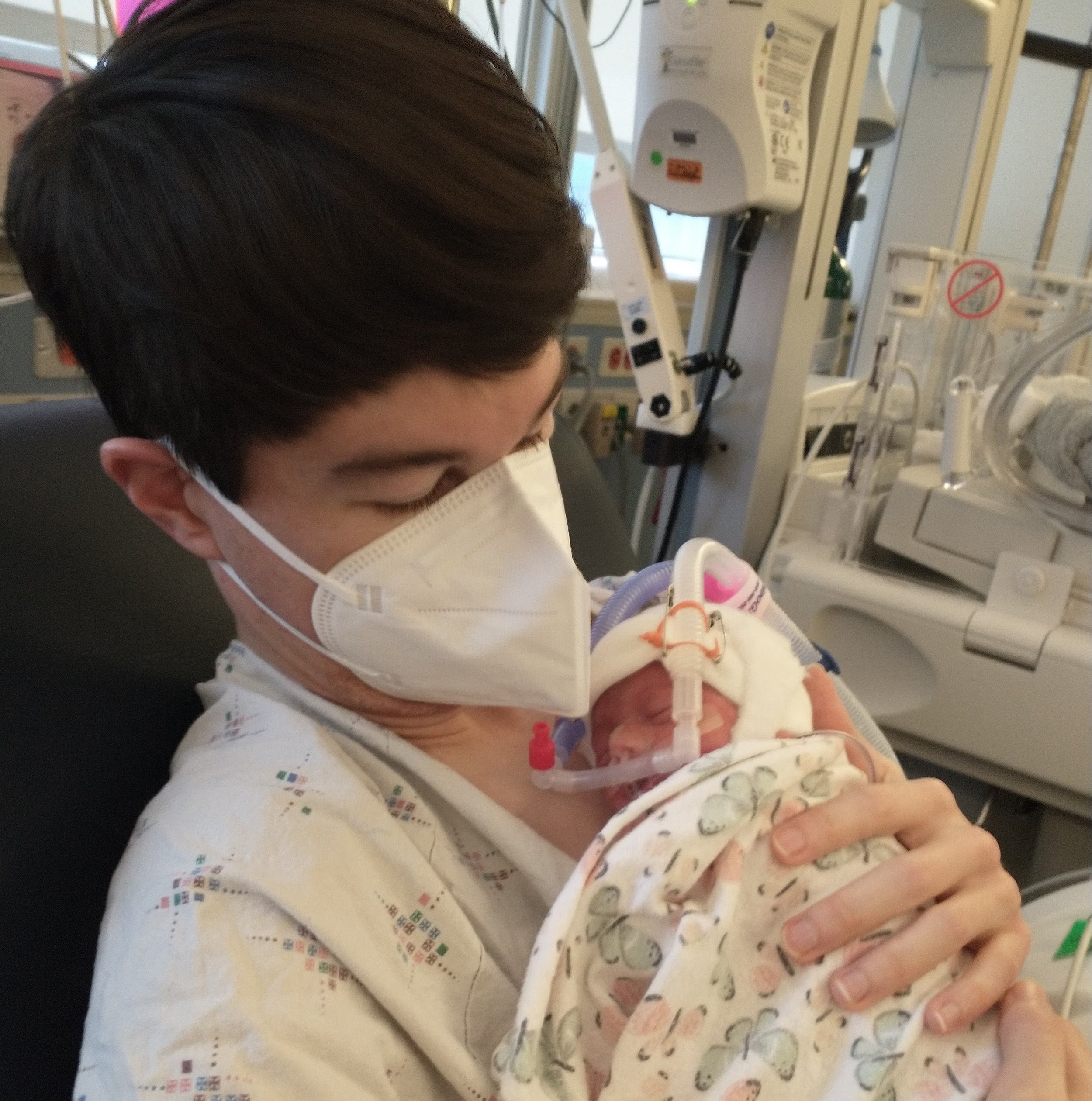
When we heard that she would be admitted to the NICU, I pictured her lying in an incubator 24/7 in a bright, white room lined with rows and rows of other newborns, while a nurse in a space suit administered nutrients and drugs via IV. I didn’t think we’d get to interact with her aside from staring through a window in the incubator.
Instead, the NICU nurses did as much as they could to make the NICU feel welcoming, and they encouraged our participation in care. Care sessions were every three hours, and we got to help at each session we were able to join by comforting her, taking her temperature, changing her sensors, changing her diaper, and holding her afterward.
For us, “kangaroo care” (holding your baby skin-to-skin against your chest) was a really meaningful way to bond with our little one. Initially, the nurses recommended kangaroo care for one long session—at least one hour—per day, but after our daughter matured enough to tolerate more handling, we got to do kangaroo care multiple times per day. With all the sensors, wires, tubes, and CPAP (for respiratory support), moving her from the incubator to lie against one of our chests was not easy, but we were grateful that we could do so.
Even for infants who need a higher level of care and can’t safely be held, interaction through positive touch is highly encouraged and has been shown to have health benefits. In those cases, caregivers can interact with their little one by reaching through holes in the sides of the incubator and placing a hand on the infant’s head and another at their bottom to provide containment and security (like the womb).
#2: NICU nurses were the perfect coaches.
As first-time parents, we didn’t know a thing about how to handle a baby. Although we’d read books about parenting, nothing can replace hands-on experience. Our nurses in the NICU did an amazing job of coaching us on how to care for our newborn. Even something as seemingly straightforward as changing a diaper felt difficult to us on a preemie who was 9 weeks premature, because raising her legs could risk injuring her hips! Our NICU nurses coached us on all the things we needed to know, and they took time to answer all our questions that came up. In a way, having the support of the NICU nurses to guide us through the first several weeks was a softer landing to caring for our little one than if she had been born full-term and had just come home immediately without that guided experience.
#3: So many programs!
I was surprised at all the programs that the NICU offered to help with infant development and to bring a sense of normalcy to living in the NICU. One of our favorites was a reading program. In this program, a representative would come by with a large, rolling cart of books every two weeks, and parents could choose a book to read with their baby. We got to keep each of the books we chose so that we could continue enjoying them together with our daughter as she grew.
There were also musicians who came by to play music for the babies. Every several days, someone would wander in with an acoustic guitar and play some gentle tunes.
Holidays didn’t go unnoticed, either. We heard from other parents about the decorations on Valentine’s Day. Since Easter was during the time our little one was in the NICU, she got to meet the Easter Bunny!
#4: Restrictions on visitors
An unwelcome surprise for us was the NICU policy on visitors. This policy will vary by hospital, but in our case, only two other registered visitors, aside from us, were allowed to visit our daughter during her entire NICU stay. That meant that once we had registered one set of grandparents as visitors, no other family members were able to meet our little one until she was discharged from the hospital.
#5: We grew to rely on the monitors
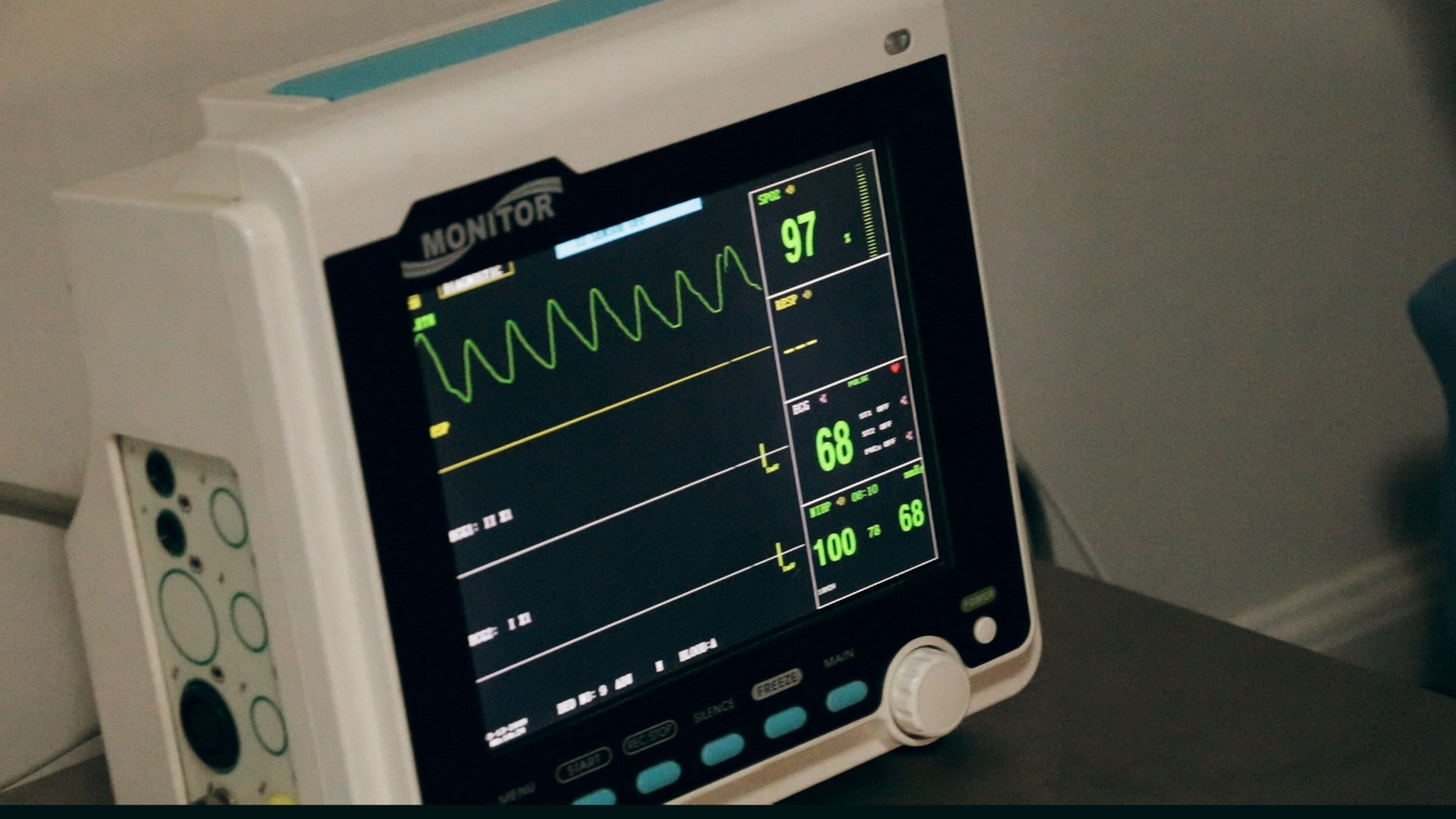
I may never forget the cacophony of alarms in the NICU. Every few minutes, and sometimes almost continuously, lights would flash and alarms would sound to alert nurses that one of the patients’ vitals were out of range. Each time an alarm would sound, we’d instinctively look up to see if the light over our daughter’s incubator was blinking, and we’d breathe a sigh of relief (with some guilt) if the alarm was for someone else.
Over our time at the NICU, we grew to rely on the monitors:
“I wonder if her neck is twisted too much.” looks up at monitor to check blood oxygen saturation
“Is she breathing too fast to coordinate drinking the milk without choking?” checks respiration rate on monitor
“I wonder if she’s sleeping deeply enough for us to set her back in the incubator now.” checks heart rate on monitor
We had a love-hate relationship with the monitoring equipment. It was a constant source of anxiety for us, and all the cords for the sensors made holding our daughter challenging, but we also trusted that the alarm would alert nurses if anything went wrong.
When we were discharged, we had to “unlearn” our habit of checking the monitor each time we wondered about her wellbeing. For the first several weeks at home, we used a mirror to check her positioning when she was sleeping on us, and we didn’t leave the room without someone else watching her. Learning to read her cues instead of watching the monitors was a journey for us.
Making the most of it

We’re really grateful to the medical team and support staff in the NICU. Their care and coaching were crucial for our daughter’s health and for our growth as new parents. The NICU experience was not at all what we’d initially pictured, and we’re glad to say that it was much more positive than we’d anticipated.
You may also be interested in this article about our daily routine while on our NICU journey.

 Our Portland Life
Leave a comment