
This is not intended as medical advice. If you have questions about newborn care, contact your child’s pediatrician.
This post contains affiliate links, so we may earn a small commission from qualifying purchases.
Why use cloth diapers?
Even before our daughter was born, we knew that we wanted her to wear cloth diapers. Although disposable diapers are convenient, their use comes with a host of downsides:
-
Most disposable diapers contain toxic chemicals, such as phthalates and VOCs, which have been shown to cause reproductive harm and more.*
-
Disposable diapers add millions of tons of landfill waste each year.
-
Using disposable diapers can delay toilet training.
-
Depending on the particular disposable diapers, cloth diapers can be cheaper.
*Notably, disposable diapers made by HealthyBaby are EWG Verified and do not contain phthalates or VOCs.
But don’t you have to wash dirty diapers?
Here’s where we took a shortcut. The least expensive option would have been to purchase cloth diapers and wash them ourselves. To save our limited time, we opted to use a cloth diaper service. Since we’re in Portland, Oregon, we used the Tidee Didee diaper service.
Since we’re using a diaper service, we simply drop the dirty diaper (with all the dirtiness) directly into a diaper pail. On our pickup day, we put the bag of dirty diapers by the front door. Then, the Tidee Didee driver drops off a bag of clean diapers and takes the dirty ones.
Caveat: we do have to wipe the diaper covers if they get dirty. At first, we made this part hard on ourselves because we’d wash the diapers in a plastic tub in the utility sink. What we do now instead is just swirl the diaper cover around in the toilet and then wash it with other diaper covers in the washing machine (separately from other clothes), using the “extra rinse” option. Pretty easy!
Do I need to use diaper pins?
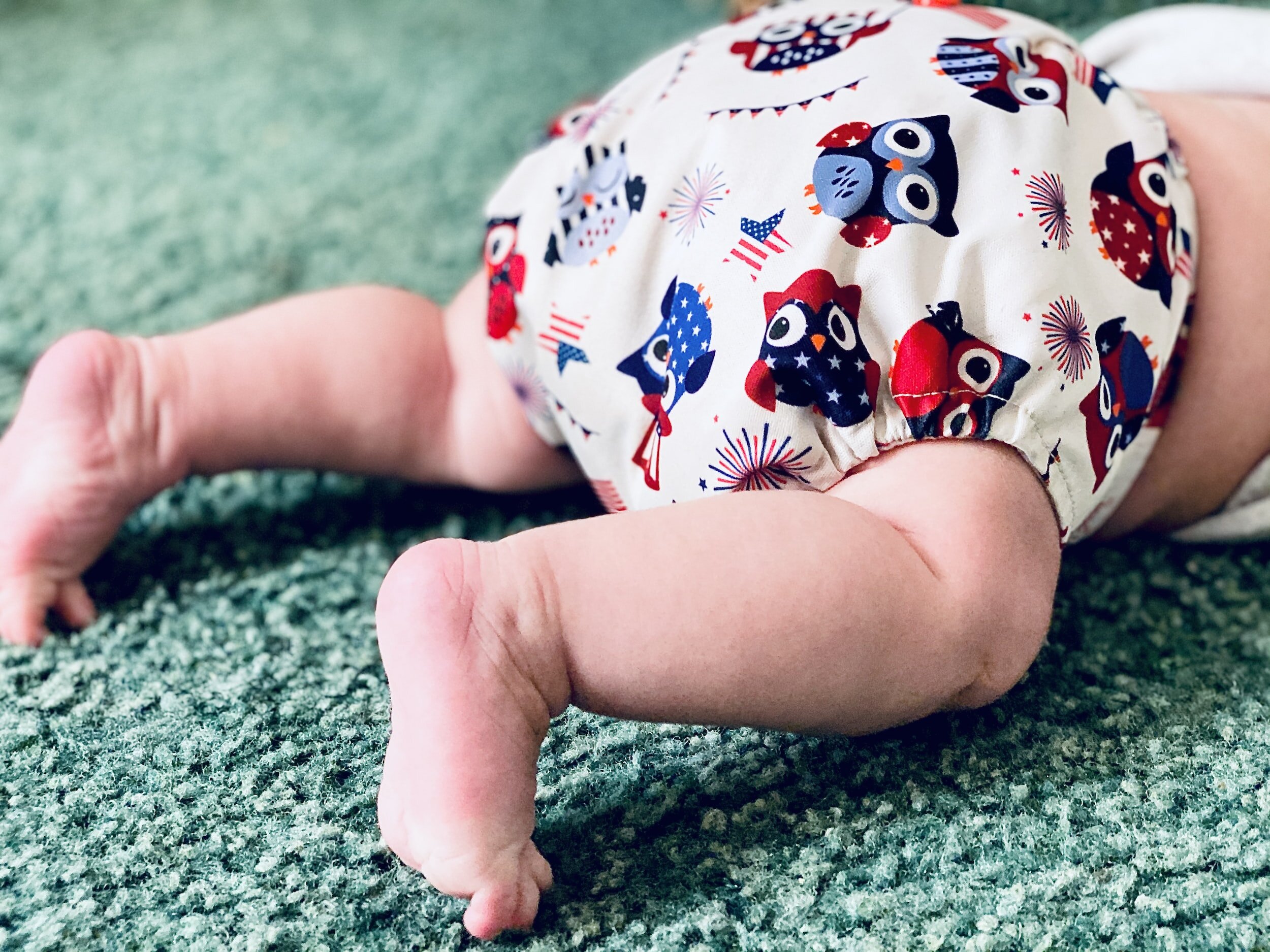
We alluded above to diaper covers, and you may be wonder what those are. Diaper covers (like these diaper covers that we love!) look similar to a regular disposable diaper but are cloth and have snaps so that they stay on. You simply fold a clean diaper into thirds, slip it into the inside of the diaper cover, and then snap the diaper cover onto the baby. It’s super easy and doesn’t involve diaper pins.
But don’t cloth diapers leak?
When our first delivery of cloth diapers arrived, we were eager to try them out. We folded a fresh diaper and slipped it into the diaper cover, then snapped the diaper cover onto our baby. All was well for a few minutes into the next feeding session when I noticed that my shirt was getting wet. Upon investigation, I discovered that our little one’s new diaper was leaking. 😬
We quickly learned the 3 things that were causing our cloth diapers to leak:
#1: The diaper cover is too big.
Our kiddo was born 9 weeks premature, and even after a long NICU stay, she was a bit small when she came home. The diaper covers that we’d purchased were large on her, so it took a couple weeks before she grew into them. We could tell that they were too big because when she was wearing one, there was extra space around her legs and waist.
We also discovered that our diaper covers had snaps to shorten them to be the appropriate size to fit a newborn. You can leave those extra snaps unsnapped as the baby grows, so that they can still use the diaper covers as a toddler.
#2: The diaper is too small.
At one point, we had somewhat the opposite problem of #1 above: the diaper cover fit well, but the diaper itself was too small. As a result, the area that the diaper covered was insufficient, resulting in a leak. Getting a bigger size of cloth diaper solve the leaks.
#3: The diaper is sticking out of the diaper cover.
If the cloth diaper is poking out around the edges of the diaper cover, the wet diaper can contact the outer clothing and wick urine into the clothing. To prevent this, be sure to tuck the diaper completely within the diaper cover.
But aren’t cloth diapers bulky?
Yes, cloth diapers + diaper covers are bulkier than disposable diapers. To compensate for this, we choose slightly larger outfits for our kiddo. Another option is to get onesie extenders.
So what are the secrets?
In our experience, these things have made cloth diapers easy to use:
-
Subscribing to a diaper service to avoid having to wash diapers
-
Ensuring a proper fit of both the diaper and diaper cover
If you choose to use cloth diapers with your little one, we hope these tips help you as well!

 Our Portland Life
Leave a comment